

Zoysia Grass in North Texas: Everything Homeowners Need to Know
Zoysia grass is a warm-season turf grass that produces a dense, dark green lawn with significantly lower maintenance requirements than Bermuda or Saint Augustine in North Texas growing conditions. It needs as little as three hours of direct sunlight per day, handles the DFW summer heat without constant irrigation, and suppresses weeds through the density of its own growth. For homeowners who are tired of fighting their current grass, Zoysia is the practical long-term alternative.
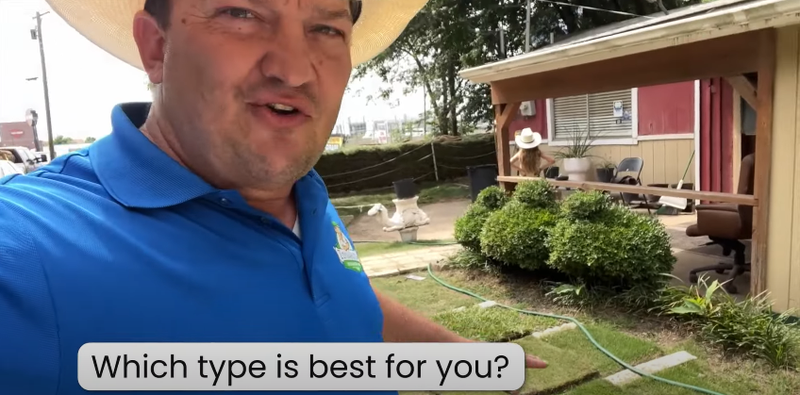
This guide covers everything a North Texas homeowner needs to know before installing Zoysia: how it grows, what it looks like, which variety fits your property, and what to expect through the seasons.
What Zoysia Grass Is and Where It Comes From
Zoysia grass is native to Southeast Asia and the Pacific Islands, where it grows in conditions that include partial shade, hot summers, and periods of drought. That origin shapes why it performs well in North Texas: the grass was built for heat, variable rainfall, and environments where full sun is not always available.
In the United States, Zoysia is classified as a warm-season grass, meaning it grows actively from late spring through early fall and goes dormant and turns brown during winter. In the Dallas-Fort Worth area, Zoysia typically goes dormant around late November and greens up again in mid-to-late April depending on soil temperature, which needs to reach approximately 65 degrees Fahrenheit to trigger active growth.
What Zoysia Grass Looks Like
Zoysia grass is recognizable by its dense, carpet-like growth pattern. It spreads laterally through stolons (above-ground runners) and rhizomes (below-ground runners), which is what creates the tight, weed-suppressing mat that fully established Zoysia produces. The blade texture ranges from fine to medium depending on the variety.
Zeon Zoysia, the most widely installed variety in North Texas, has a fine blade width comparable to a premium Bermuda grass. The color is a deep, blue-green that holds through the growing season and photographs well. Palisades Zoysia has a medium-coarse blade, slightly wider than Zeon, with the same deep green color.
During summer, a properly installed and maintained Zoysia lawn looks thick, uniform, and weed-free. During dormancy in winter, it turns a tan to golden brown color. Compared to Bermuda or Saint Augustine during dormancy, Zoysia typically holds its structure better and looks more manicured during the dormant period.
The Two Zoysia Varieties We Install in DFW
Zeon Zoysia
Zeon Zoysia is the top-selling variety installed by ZoysiaSod.com and the most widely recognized premium Zoysia in the United States. It was selected as the turf for the 2016 Rio Olympics Golf Course and consistently ranks first in the National Turfgrass Evaluation Program for quality and appearance among fine-bladed Zoysia varieties.
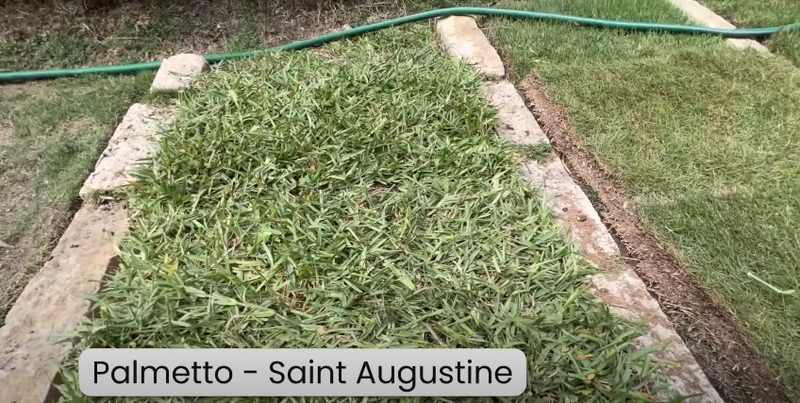
Zeon performs best in lawns receiving four or more hours of direct sunlight per day. It has good shade tolerance down to approximately three hours, making it appropriate for most DFW residential lawns. It produces significantly less thatch than comparable warm-season grasses when fertilized correctly, which reduces one of the most common maintenance problems in established Zoysia lawns.
Palisades Zoysia
Palisades Zoysia is the choice for DFW properties with significant tree canopy or north-facing exposures that limit sunlight to three to four hours per day. It provides the deepest shade tolerance of any Zoysia variety we install, performing comparably to Saint Augustine in low-light conditions without Saint Augustine’s susceptibility to Brown Patch, Take-All Root Rot, and Chinch Bug damage.
Palisades has a medium-textured blade and the same deep green color as Zeon. It is an excellent choice for the established neighborhoods across Plano, Allen, Carrollton, and Colleyville where mature trees have created shaded backyards that Bermuda can no longer maintain.
How Much Sun Does Zoysia Grass Need in North Texas?
Both Zeon and Palisades Zoysia require a minimum of three hours of direct sunlight per day to maintain density, color, and weed suppression. This is the critical threshold below which even shade-tolerant Zoysia begins to thin over time.
For Bermuda grass, the equivalent minimum is five to six hours. That two-to-three hour gap is why Zoysia succeeds in conditions where Bermuda has failed. In North Texas neighborhoods where trees were planted 15 to 25 years ago, the sunlight available in many backyards has dropped below what Bermuda can sustain. Zoysia holds where Bermuda has quit.
To measure the shade on your lawn accurately, check the lowest-sun section of your property on a clear day by walking through every hour from 8 a.m. to 6 p.m. and noting when direct sunlight contacts the surface. Dappled light under a tree canopy does not count as direct sunlight for this purpose.
How Zoysia Handles North Texas Drought
Zoysia is rated excellent for drought tolerance by Texas A&M AgriLife Extension turfgrass research. The root system of established Zoysia penetrates deeper into the soil than most warm-season grasses, allowing it to access moisture at depths that shallow-rooted Bermuda cannot reach during extended dry periods.
Palisades Zoysia, once fully established, requires as little as one to two deep irrigation cycles per month during very dry conditions. Zeon is similarly efficient. An established Zoysia lawn on a well-maintained irrigation schedule uses significantly less water than a comparable Bermuda lawn that needs to stay green through a DFW August.
Zoysia Maintenance in North Texas: Mowing, Fertilizing, and Watering
Zoysia grows slowly compared to Bermuda, which means less frequent mowing during the growing season. At the recommended height of one to two inches, most North Texas Zoysia lawns can be mowed every seven to ten days during active growth rather than weekly or twice-weekly as Bermuda often requires.
Fertilization should be limited to three applications per year in North Texas: spring (after green-up, approximately May), summer (July), and early fall (no later than early September). Over-fertilization is the most common cause of thatch buildup and fungal disease in Zoysia lawns. More nitrogen does not produce a better-looking Zoysia lawn. It produces a disease-prone one.
Watering established Zoysia should be deep and infrequent rather than shallow and frequent. The goal is to wet the soil to a depth of six inches and then allow the upper layers to dry slightly before the next irrigation cycle. This approach encourages the deep root development that makes Zoysia drought-tolerant long-term.
Zoysia Sod vs. Plugs vs. Seed: What Is Right for North Texas?
Sod is the correct installation method for North Texas homeowners who want an established Zoysia lawn without a one-to-two-year wait. Professionally installed Zoysia sod roots within three to six weeks of installation and provides complete coverage from the day it goes down.
Plugs are small sections of Zoysia spaced across bare soil that expand outward over time to fill in. They can take one to two full growing seasons to achieve full coverage, and the lawn looks patchy throughout the establishment period. For most residential applications, plugs are not a practical choice.
Zoysia seed is rarely a viable option for the premium varieties used in residential installations. Zeon and Palisades are sterile hybrids that cannot be grown from seed. What is sold as Zoysia seed is typically a lower-quality variety with inconsistent germination and unpredictable results.
Installing Zoysia Sod in Dallas-Fort Worth
ZoysiaSod.com has been installing Zeon Zoysia and Palisades Zoysia across the DFW Metroplex since 2005. Every installation we complete is a combined supply-and-install service that covers soil amendment, precision grading, and professional sod placement. We do not offer material-only sales because the installation process, specifically the soil preparation and grading, is what determines whether a Zoysia lawn establishes correctly and holds long-term.
Our written guarantee covers every project and is available to review at zoysiasod.com/guarantee before you schedule anything. Get a free satellite-based project estimate at zoysiasod.com/quote and receive a project budget within 24 hours. Call 469-802-0424 to discuss your North Texas Zoysia project.