
How to Fertilize Zoysia Grass in North Texas (And When Not To)
Zoysia grass is one of the most reliable and attractive turf options for North Texas homeowners. It creates a dense, carpet-like lawn that handles heat, drought, and partial shade better than many warm-season grasses. But while Zoysia is known for being low-maintenance, it still needs proper fertilization to reach its full potential.
The key is not just what you use, but when and how often you apply fertilizer. North Texas has extreme seasonal changes, and Zoysia responds very differently in spring, summer, and fall. Fertilizing at the wrong time can do more harm than good.
This guide explains exactly how to fertilize Zoysia grass in North Texas, when to apply it, what products work best, and—just as importantly—when you should avoid fertilizing completely.
Understanding How Zoysia Grows in North Texas
Before applying fertilizer, it’s important to understand the growth cycle of Zoysia grass.
Zoysia is a warm-season grass, which means it:
- Grows actively during late spring and summer
- Goes dormant and turns brown in winter
- Spreads slowly but forms a very dense turf over time
- Develops strong underground rhizomes and stolons
In North Texas, the typical growth cycle looks like this:
Zoysia begins to green up in late April or early May, depending on soil temperatures. It reaches peak growth during June, July, and August when temperatures are consistently high. As fall approaches in September and October, growth slows down. By late November, the grass enters dormancy.
This natural cycle is what determines the correct fertilization schedule.
The Golden Rule of Fertilizing Zoysia
The most important rule for Zoysia care is simple:
Only fertilize when Zoysia is actively growing.
Fertilizer is not a “green-up button.” If the grass is not actively growing, it cannot properly use nutrients. Instead, unused fertilizer can lead to weed growth, weak turf, or even lawn damage.
A good way to think about it:
- Active growth = fertilize
- Dormant or stressed lawn = do NOT fertilize
Best Time to Fertilize Zoysia Grass in North Texas
Timing your fertilizer applications correctly will make a huge difference in lawn thickness, color, and health.
Spring Fertilization (After Green-Up)
Spring is the first feeding of the year, but it must be done carefully. Do not fertilize just because it is April or May—wait until the lawn is fully green and actively growing.
Best conditions for first application:
- Grass is fully green (not patchy)
- Soil temperatures are consistently warm
- No risk of late frost
At this stage, Zoysia is recovering from winter dormancy and beginning its growth cycle. A light application of fertilizer helps jump-start healthy development.
Recommended approach:
- Use a slow-release nitrogen fertilizer
- Apply a moderate or light dose
- Water thoroughly after application
This first feeding sets the foundation for the entire season.
Late Spring to Early Summer (Main Growth Feeding)
This is the most important fertilization period of the year. Once Zoysia is fully active, it responds very well to nutrients.
During this stage, the lawn is:
- Growing rapidly
- Filling in thin areas
- Building density and color
What to focus on:
- Balanced fertilizer with nitrogen
- Optional iron for deeper green color
- Even application across the lawn
Benefits of this feeding:
- Stronger root development
- Improved lawn thickness
- Better color heading into summer heat
This is the “building phase” for your lawn.
Summer Fertilization (Heat-Sensitive Period)
Summer fertilization in North Texas requires caution. While Zoysia is actively growing, extreme heat can stress turf if over-fertilized.
When temperatures consistently rise above 95°F, lawns become more sensitive.
In summer, your goal should be maintenance, not aggressive growth.
Good practices include:
- Light fertilizer application only if needed
- Slow-release nitrogen only
- Iron supplements for color instead of heavy feeding
Avoid fertilizing during:
- Heat waves
- Drought stress
- Yellowing or weak turf conditions
Too much fertilizer in summer can burn the lawn or increase disease pressure.
Early Fall Fertilization (Most Important Feeding for Next Year)
Fall fertilization is often overlooked, but it is one of the most important steps for long-term lawn health.
This is the final feeding before dormancy.
Why it matters:
- Strengthens root system before winter
- Helps store nutrients for spring green-up
- Improves lawn recovery next season
Best fertilizer type:
- Low to moderate nitrogen
- Higher potassium blend (root support)
This feeding does not focus on growth—it focuses on survival and preparation.
When NOT to Fertilize Zoysia Grass
Knowing when NOT to fertilize is just as important as knowing when to fertilize. Many lawn problems come from applying fertilizer at the wrong time.
Do NOT fertilize during dormancy
In winter (late October through March), Zoysia is not actively growing.
- The grass is brown or semi-dormant
- Nutrients will not be absorbed
- Weed growth may increase instead
Fertilizing during dormancy is one of the most common mistakes homeowners make.
Do NOT fertilize immediately after installation
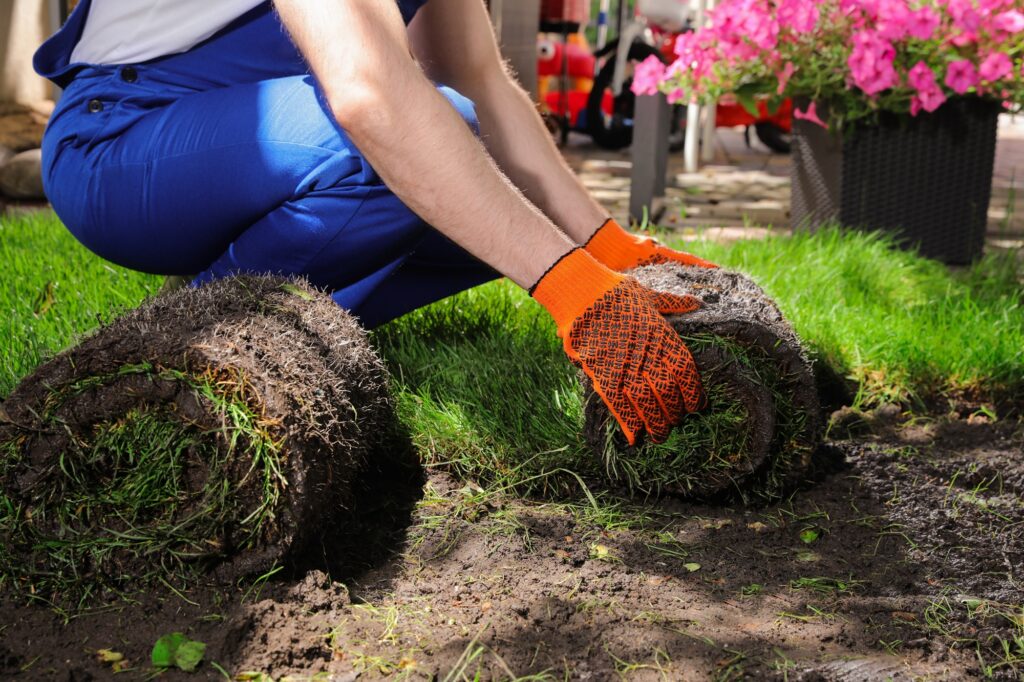
New sod needs time to establish roots before fertilizer is introduced.
After installing Zoysia sod:
- Focus on watering first
- Allow 4–6 weeks for rooting
- Only then consider a starter fertilizer if needed
Applying fertilizer too early can stress young roots and slow establishment.
Do NOT fertilize during drought or stress
If your lawn is:
- Dry and crunchy
- Wilting or turning blue-gray
- Not recovering after watering
Stop fertilizing immediately.
Fertilizer without moisture can burn grass and damage roots.
Do NOT over-fertilize
More fertilizer does not mean better grass.
Over-fertilization can cause:
- Excess thatch buildup
- Weak root systems
- Faster mowing cycles
- Increased fungal disease
Zoysia performs best with controlled, moderate feeding—not heavy applications.
Best Types of Fertilizer for Zoysia Grass
Choosing the right fertilizer is just as important as timing.
Slow-Release Nitrogen Fertilizer
This is the best overall option for Zoysia lawns.
Why it works:
- Feeds gradually over time
- Reduces risk of burning
- Supports steady growth
Iron Supplements (Optional)
Iron does not make grass grow—it enhances color.
Benefits include:
- Darker green appearance
- No excessive growth
- Safe for summer use
Low-Phosphorus Fertilizer
Most Texas soils already contain phosphorus, so extra amounts are unnecessary.
Too much phosphorus can:
- Disrupt soil balance
- Encourage weeds
Simple Seasonal Fertilization Schedule
Here is a straightforward breakdown homeowners can follow:
Spring (April–May):
- First application after green-up
- Light to moderate feeding
Late Spring (May–June):
- Main growth feeding
- Balanced fertilizer
Summer (July–August):
- Light feeding only if needed
- Iron optional for color
Early Fall (August–September):
- Final feeding of the year
- Focus on root strength
Winter (October–March):
- No fertilizer
Common Fertilizing Mistakes Homeowners Make
Many Zoysia problems come from simple mistakes:
- Fertilizing too early in spring
- Using too much nitrogen in summer
- Ignoring soil conditions
- Skipping watering after fertilizing
- Applying fertilizer during dormancy
Avoiding these mistakes will immediately improve lawn health and appearance.
Why Proper Fertilization Matters for Zoysia
When fertilized correctly, Zoysia becomes one of the most attractive turf grasses available.
It provides:
- Thick, carpet-like coverage
- Natural weed resistance
- Strong drought tolerance
- Beautiful green color through summer
- Long-term durability with low maintenance
But these results only happen when fertilization is done correctly and consistently.
Fertilizing Zoysia grass in North Texas is not complicated, but it does require timing and discipline. The biggest mistake homeowners make is over-fertilizing or feeding at the wrong time of year.
Frequently Asked Questions (FAQs)
1. How often should Zoysia grass be fertilized in North Texas?
Zoysia grass in North Texas should typically be fertilized 3 to 4 times per year during its active growing season. The best schedule includes late spring, early summer, and early fall applications. Light summer feeding may be optional depending on lawn health. Avoid fertilizing during winter dormancy.
2. What type of fertilizer works best for Zoysia grass?
A slow-release nitrogen fertilizer is the best choice for Zoysia grass. It provides steady nutrition over time without causing rapid, weak growth. In addition, iron supplements can be used occasionally to enhance deep green color without forcing excessive growth.
3. When should I avoid fertilizing Zoysia grass?
You should avoid fertilizing Zoysia grass during:
- Winter dormancy (late fall through early spring)
- Extreme heat or drought stress
- Immediately after sod installation (before rooting is established)
Fertilizing at the wrong time can stress the lawn and reduce long-term performance.
4. Can I fertilize newly installed Zoysia sod right away?
No. Newly installed Zoysia sod should not be fertilized immediately. It needs time to establish strong roots first, which usually takes 4 to 6 weeks. During this period, proper watering is more important than fertilization.
5. Why is my Zoysia lawn not responding to fertilizer?
If your Zoysia lawn is not responding to fertilizer, it may be due to dormancy, poor watering practices, soil compaction, or incorrect timing. In many cases, the issue is not the fertilizer itself but the lawn’s growth stage or soil conditions.
If you follow the natural growth cycle of the grass—spring green-up, summer growth, and fall preparation you will get a healthier, thicker, and more resilient lawn without unnecessary chemicals or stress.
Less is often more with Zoysia. The goal is balance, not force.
Need Professional Help With Your Zoysia Lawn?
If you’re ready to get high-quality Zoysia sod in the DFW area, we can guide you through the entire process from measuring your lawn and preparing the soil to complete professional installation. Our team makes sure your sod is installed correctly for strong, long-lasting results in North Texas conditions.
Call us today at 469-802-0424 to get your free estimate and schedule your Zoysia sod delivery.