

What to Expect When Getting a New Lawn Installed in North Texas
A new lawn installation is one of the most effective ways to improve curb appeal and increase the value of a home in North Texas. However, the process involves more than simply rolling out sod. Between soil conditions, grading requirements, and the region’s hot climate, each step plays an important role in how successful your lawn will be long term. Understanding what happens before, during, and after installation helps homeowners set realistic expectations and get better results from their investment.
Initial Lawn Evaluation and Planning
The process usually begins with a detailed evaluation of your property. Installers assess the condition of your soil, drainage patterns, sunlight exposure, and overall yard layout. In North Texas, this step is especially important because many properties contain compacted clay soil or uneven grading from construction. These conditions can significantly impact how well new grass establishes.
During this stage, the type of grass is also selected based on your yard’s specific needs. Options like Zoysia, Bermuda, and St. Augustine are commonly recommended depending on shade levels, maintenance preferences, and intended lawn use.
Clearing the Existing Lawn and Preparing the Ground
Before new sod can be installed, any existing grass, weeds, or debris must be removed. This step ensures that nothing interferes with the root system of the new lawn. Old turf, rocks, and organic buildup are cleared to create a clean foundation.
This phase is essential because leftover vegetation or uneven material can prevent proper root contact with the soil. A properly cleared yard allows the new sod to settle evenly and establish faster without competition from previous growth.
Soil Preparation and Grading Work
Soil preparation is one of the most important steps in the entire installation process, especially in North Texas where clay soil dominates most residential areas. The soil is often compacted, which restricts water movement and root growth.
To correct this, the ground is loosened, reshaped, and graded to create proper drainage and a smooth surface. In many cases, compost or sandy loam is added to improve soil texture and nutrient balance. This helps the new lawn develop stronger roots and reduces issues like water pooling or dry patches.
Proper grading also ensures the finished lawn has a smooth, even appearance, which improves both aesthetics and mowing performance.
Sod Delivery and Installation Process
Once the soil is fully prepared, fresh sod is delivered and installed, typically on the same day to ensure it stays healthy. Timing is important because sod begins to dry out quickly if left uninstalled for too long.
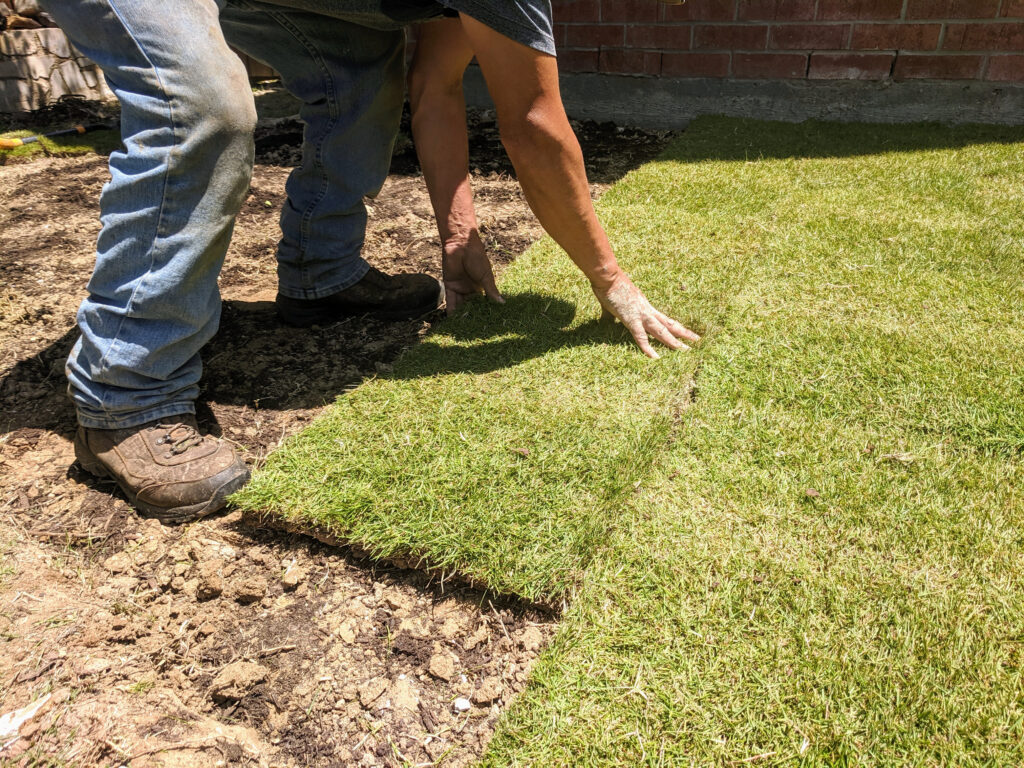
During installation, the sod is carefully laid in a staggered pattern so seams are not aligned in straight rows. This technique improves stability and helps the lawn blend together more naturally. Installers also take care to press each piece tightly against the next to prevent gaps that could lead to drying or uneven growth.
Edges around driveways, sidewalks, and garden beds are trimmed to ensure a clean and professional finish.
Rolling, Settling, and First Watering
After installation, the lawn is often rolled to improve contact between the sod and the soil underneath. This step helps remove air pockets and ensures the roots can begin bonding with the ground immediately.
The first watering is applied right after installation and is one of the most important parts of the entire process. It helps the sod stay hydrated and encourages early root development. Without proper initial watering, even high-quality sod can struggle to establish.
Watering Schedule During Establishment
In the first few weeks after installation, watering plays a major role in the success of your lawn. The soil in North Texas can dry quickly due to heat and wind, so consistent moisture is necessary.
Homeowners typically need to water more frequently at the beginning, then gradually reduce watering as the roots grow deeper. The goal is to encourage the grass to search for water below the surface, which leads to a stronger and more drought-resistant lawn over time.
Root Development and Early Growth Phase
Within a few weeks, the sod begins to anchor itself into the soil. This is the most sensitive stage of the process, where proper care makes a significant difference in long-term results. During this period, it is important to avoid heavy foot traffic and allow the roots to strengthen without disruption.
As the lawn continues to establish, you will notice improved color, better coverage, and increased resistance to drying or stress. By the end of this phase, the lawn starts to feel more stable underfoot and behaves more like a mature yard.
Long-Term Lawn Care Expectations
Once the lawn is fully established, maintenance becomes more routine. Regular mowing, seasonal fertilization, and proper watering adjustments are key to keeping the lawn healthy throughout the year.
North Texas weather can be extreme, with hot summers and occasional drought conditions, so ongoing care helps maintain color and density. A properly installed lawn will require less correction work later, but it still benefits from consistent attention.
Common Challenges in North Texas Lawn Installations
North Texas presents a few unique challenges that homeowners should be aware of. Clay soil drainage issues, high summer temperatures, and uneven ground from new construction are all common factors that affect lawn performance.
These challenges are manageable, but only when soil preparation and installation are done correctly. Without proper groundwork, even high-quality sod can struggle to thrive.
Why Professional Installation Makes a Difference
While sod installation may seem simple on the surface, long-term success depends heavily on preparation and technique. Professional installers understand how to correct soil issues, create proper grading, and ensure the sod is placed for optimal growth.
A well-installed lawn will establish faster, look more even, and require fewer repairs in the future. In contrast, poor installation often leads to patchy growth, drainage problems, and uneven surfaces that are difficult to fix later.
A new lawn installation in North Texas is a step-by-step process that requires careful attention to soil, grading, installation, and early maintenance. Each stage builds on the one before it, and skipping any part can affect the final result.
When done properly, a new lawn will not only improve the appearance of your home but also provide long-lasting durability and better performance in Texas weather conditions.
FAQs About New Lawn Installation in North Texas
1. How long does it take for new sod to establish?
Most lawns begin rooting within 2–3 weeks and fully establish in about 6–8 weeks depending on weather and care.
2. Can I walk on new sod after installation?
It is best to avoid heavy foot traffic for at least 2–3 weeks to allow proper root development.
3. How often should I water new sod?
New sod requires frequent watering at first, then gradually less as the lawn becomes established.
4. What is the best grass type for North Texas lawns?
Zoysia, Bermuda, and St. Augustine are commonly used depending on shade, soil, and maintenance needs.
5. Why is soil preparation so important?
Proper soil preparation improves drainage, strengthens root growth, and ensures long-term lawn health.If you’re ready to transform your yard with a professionally installed new lawn in North Texas, our team is here to help. We handle everything from soil preparation and grading to sod installation and long-term establishment, ensuring your lawn is built to thrive in local conditions. Don’t settle for patchy grass or uneven growth when you can have a thick, healthy, and long-lasting lawn installed the right way from the start.
Call us today at 469-802-0424 to schedule your free estimate and get started on your new lawn project.