

How to Measure Your Yard for Zoysia Sod Installation
An accurate yard measurement is the starting point for any Zoysia sod installation estimate. Whether you use ZoysiaSod.com’s free satellite measurement service or want to understand the scope of your project before calling, knowing how to calculate your lawn’s square footage gives you a realistic picture of what the installation involves.
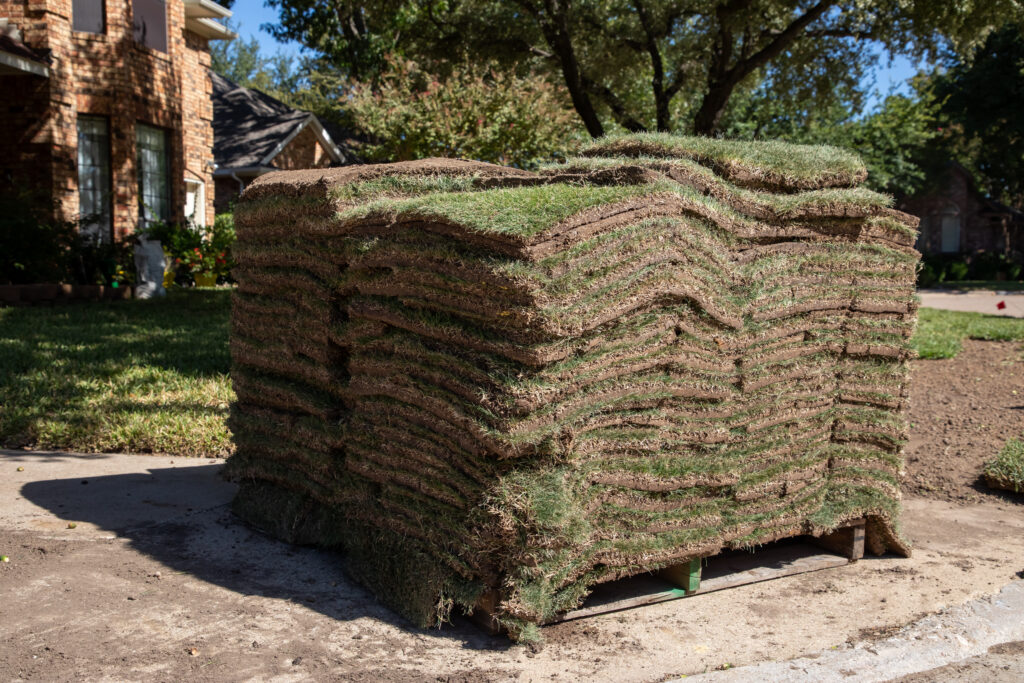
Sod is sold and installed by the square foot. Knowing your approximate square footage helps you understand the scale of the project, whether there are any site-specific factors that affect scope, and what the installation will require in terms of preparation and materials.
The Easy Way: ZoysiaSod.com’s Free Satellite Estimate
ZoysiaSod.com uses satellite imagery to measure your property and calculate the lawn area that needs to be installed. This service is free and produces a project estimate within 24 hours without requiring you to come to our location or schedule an on-site visit. The satellite measurement is accurate enough for project scoping and estimate purposes, and it accounts for non-lawn areas like driveways, beds, and structures automatically. Submit a measurement request at zoysiasod.com/quote or try our interactive measurement tool at zoysiasod.com/tools/sod-measurement-tool/.
For homeowners who want to understand how the measurement is calculated, or who are working on a section of lawn where the boundaries are complex, the manual measurement methods below explain how to arrive at an accurate square footage for any yard shape.
Measuring a Simple Rectangular or Square Lawn
For a rectangular or square lawn, the calculation is straightforward: length multiplied by width equals square footage.
Measure the longest dimension of the lawn from edge to edge in feet. Then measure the width perpendicular to the length. Multiply the two numbers. A lawn that is 60 feet long and 40 feet wide is 2,400 square feet.
For irregular rectangles where the width varies slightly from one end to the other, take width measurements at three points (front, middle, and back) and use the average. A lawn that measures 38 feet wide at one end, 40 in the middle, and 41 at the other end averages 39.7 feet wide. Multiplied by 60 feet long, that is approximately 2,382 square feet.
Measuring an L-Shaped or T-Shaped Lawn
L-shaped and T-shaped lawns are divided into rectangles and calculated separately, then added together.
For an L-shape: identify where the lawn bends and divide it into two rectangles at that point. Measure the length and width of each rectangle separately and calculate both square footages. Add them together for the total.
Example: an L-shaped backyard where one leg is 50 feet by 30 feet (1,500 sq ft) and the second leg is 20 feet by 25 feet (500 sq ft) has a total area of 2,000 square feet.
Measuring Curved or Irregular Lawn Areas
Most DFW residential lawns have at least some curved edges, whether from winding bed borders, curved driveways, or rounded corners. These areas cannot be measured as simple rectangles and require a different approach.
One reliable method for irregular shapes: measure the overall rectangular boundary that would contain the full lawn area, then estimate and subtract the areas outside the lawn within that boundary. A front lawn that fits within a 50-by-30-foot rectangle but has a curved bed taking up roughly 200 square feet in one corner has a net lawn area of approximately 1,300 square feet.
For very irregular shapes like curved side yards or narrow strips along fences, divide the area into sections at the widest and narrowest points and use the average width multiplied by the length.
Measuring Around Structures and Obstacles
Driveways, patios, swimming pools, existing garden beds, and tree circles are all areas where sod will not be installed. Each of these needs to be subtracted from the total lawn area calculation.
Measure each structure or obstacle as a rectangle or circle and subtract it from the gross lawn area. For a pool or circular bed, use the formula for a circle: pi (3.14) multiplied by the radius squared. A circular tree bed that is 8 feet in diameter has a radius of 4 feet. 3.14 multiplied by 16 equals approximately 50 square feet to subtract.
Adding the Overage Buffer
Professional sod installers typically order five to ten percent more sod than the calculated square footage to account for irregular cuts at edges, wasted pieces around obstacles, and any sections where pieces do not fit perfectly. ZoysiaSod.com accounts for this overage automatically in our project estimates based on the satellite measurement and the complexity of the installation area.
If you are calculating independently, add 10 percent to your final square footage number as a buffer. A 2,000 square foot lawn estimate becomes a 2,200 square foot order to ensure complete coverage without running short.
Common Measurement Mistakes
- Forgetting to subtract non-lawn areas: driveways, patios, pools, and beds are not sod areas.
- Measuring the lot instead of the lawn: the total lot size includes the house footprint, which is not part of the installation.
- Not accounting for steep grades: sloped areas install the same as flat areas in terms of square footage, but steep grades affect installation complexity.
- Underestimating curved sections: curved bed borders and organic shapes take more material than a clean rectangle suggests.
Using Your Measurement in a ZoysiaSod.com Estimate
If you have measured your lawn manually and want to discuss your project before using the satellite estimate tool, call 469-802-0424 with your square footage and ZoysiaSod.com can provide a preliminary scope review. For the most accurate project estimate, submit your property address through our satellite measurement service at zoysiasod.com/quote and we will deliver a complete project estimate within 24 hours. Our written guarantee covers every installation at zoysiasod.com/guarantee.