
Palisades Zoysia Sod Installation in North Texas
Zoysia Sod installs Palisades Zoysia sod across Dallas-Fort Worth for lawns that have lost their sun to mature trees. Palisades is the most shade-tolerant Zoysia we install, and it is the variety we reach for when Bermuda has thinned out under the canopy and Saint Augustine has become a fungus problem. Family owned by Tanner and Missy Maxson and installing Zoysia since 2005, we include a free sunlight analysis, soil preparation, and a written guarantee with every project. Request a free 24-hour satellite estimate or call 469-802-0424.
What Is Palisades Zoysia?
Palisades is a Zoysia cultivar developed by Texas A&M University and released in 1996, according to the University of Florida IFAS zoysiagrass guide, which also notes its excellent drought tolerance and fast rate of establishment. It has a medium to medium-coarse blade with an upright growth habit, per Clemson’s Home and Garden Information Center, which lets it be mowed anywhere from three inches down to a half inch for specialty uses.
The reason it matters in North Texas is shade. Palisades holds density and color with as little as three hours of direct sunlight per day, which puts it in Saint Augustine territory for low-light performance without Saint Augustine’s disease and cold problems. It was bred in Texas, for Texas soil and Texas summers, and it shows.
What Our Palisades Zoysia Installation Includes
Free Sunlight Analysis
Palisades performs from three hours of direct sun up to full sun. If a section of your lawn gets less than that, Zoysia is not the fix, and we will tell you so. We map the property and mark which areas qualify for Palisades, which qualify for Zeon Zoysia, and which need a bed, mulch, or tree pruning instead.
Turf Removal and Soil Preparation
Shaded lawns usually come with two extra problems: tree roots near the surface and compacted, damp clay that drains poorly. We remove the old grass, correct the grade, and work a compost blend into the top layer so the new sod has somewhere to root. Read why compost soil is best for sod installation.
Sod Installation
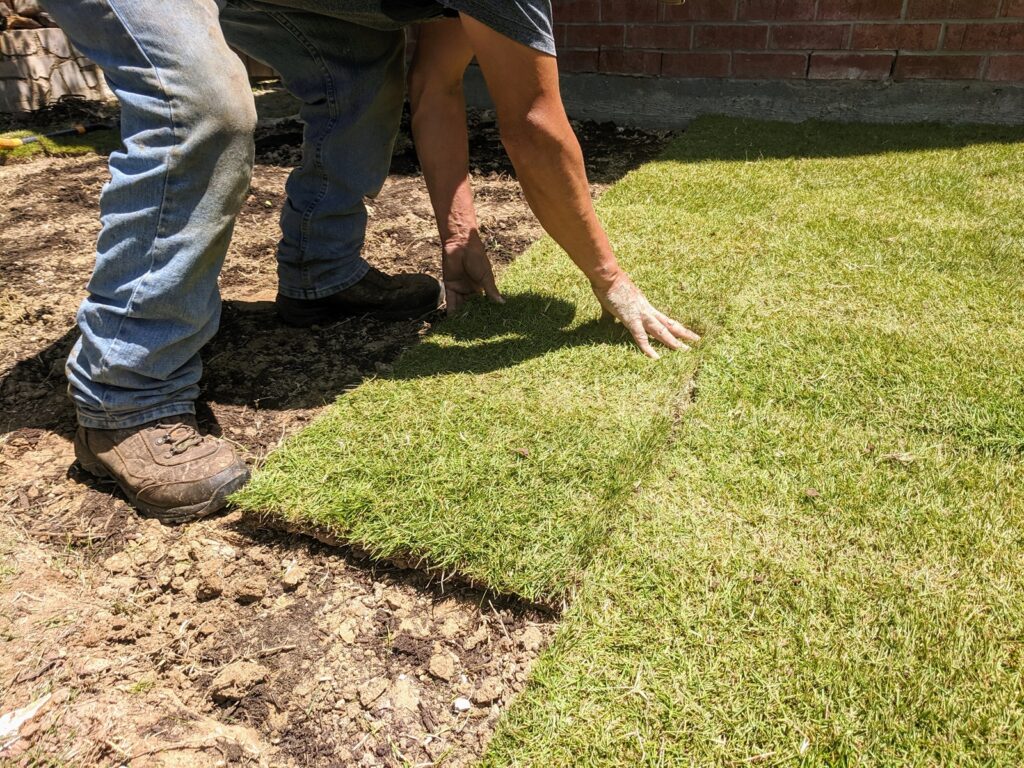
Fresh Palisades goes down the day it arrives, seams staggered, edges cut clean, and the whole surface rolled tight to the soil. Under trees we pay extra attention to root flare areas so the sod sits flat and does not dry out over exposed roots.
First 30 Days of Care Guidance
Shaded sod dries slower than sod in full sun, so the watering schedule is different. You get a written plan for the first month and our new Zoysia sod care guide covers the rest.
Drainage and Leveling
Low spots under trees stay wet and invite fungus. Where needed we level and top dress so water moves instead of pooling.
Signs Palisades Is the Right Grass for Your Lawn
- Your backyard Bermuda has thinned to dirt under live oaks, pecans, or cedar elms.
- Your Saint Augustine gets brown patch every fall and freeze damage every few winters.
- Parts of the lawn get three to five hours of direct sun, not six or more.
- You want a traditional lawn look rather than a fairway finish.
- You want one grass that works in the sunny strip by the street and the shady strip by the fence.
Palisades vs. Zeon vs. Saint Augustine in Shade
| Factor | Palisades Zoysia | Zeon Zoysia | Saint Augustine |
| Minimum direct sun | About 3 hours | 3 to 4 hours | 4 to 5 hours for most varieties |
| Blade | Medium to medium-coarse | Fine | Coarse |
| Fall fungus pressure | Low with proper nitrogen | Low | High (brown patch) |
| Cold tolerance | Good | Good | Weak |
| Best use | Shaded and mixed-light lawns | Sunny showpiece lawns | Replaced by Palisades in most DFW cases |
Our post on Zoysia vs. Saint Augustine goes deeper on why so many DFW homeowners make the switch.
Why Professional Palisades Installation Matters
Shade installations fail for predictable reasons: the wrong variety in the wrong spot, sod laid over compacted clay and tree roots, and a watering schedule copied from a full-sun lawn. Texas A&M’s AggieTurf profile lists slow recuperative potential as a weakness of zoysiagrass, so a shaded Palisades lawn that gets off to a bad start does not fill in on its own the way Bermuda might in full sun.
We have installed Zoysia under North Texas trees since 2005. We know how much light a live oak actually lets through in July, how far pecan roots run, and how to prep clay so the sod roots instead of rots.
Our Process
- Free estimate. Send us your address and we measure by satellite and reply within 24 hours.
- Sunlight and soil review. We confirm Palisades is right for each section, and flag areas too dark for any grass.
- Schedule. Palisades establishes quickly during the warm season; spring through early fall is ideal.
- Removal and prep. Old turf out, grade fixed, compost worked in around roots.
- Installation. Sod laid, rolled, and edged the same day.
- Care handoff. A first-month watering plan tuned for shade, plus our number for questions.
Why Choose Zoysia Sod for Palisades Installation
| What We Offer | What It Means for You |
| Installing Zoysia since 2005 | Twenty years of shaded DFW backyards, and we know which ones work |
| Family owned by Tanner and Missy Maxson | You deal with the people responsible for the result |
| Zoysia only, Palisades and Zeon | We are not going to talk you into Saint Augustine because it is on the truck |
| Free sunlight analysis | Honest answer on whether your shade is workable before you spend anything |
| Soil preparation included | New sod goes on prepared soil, not scalped clay |
| Written guarantee | Warranty service on every installation. Terms on our guarantee page |
| Free 24-hour satellite estimate | Numbers in a day, not a week |
| Lewisville, TX office | 424 East Main Street, Suite 103. Local to the trees we work under |
Palisades Zoysia in the North Texas Climate
Shade in DFW is a moving target. Neighborhoods built in the 1990s and 2000s in Plano, Frisco, and Flower Mound now have 25-year-old trees casting shade that did not exist when the builder laid Bermuda. That is the single biggest reason we install Palisades.
The climate helps and hurts. NWS 1991 to 2020 normals for DFW show average July and August highs near 96 degrees, so shade is a relief for the grass in summer. But the average first freeze arrives November 22, per the NWS Fort Worth freeze data, and the cool, damp weeks before it are prime large patch season. NC State Extension notes large patch activity when soil temperatures consistently reach 70 degrees in fall, which is why we keep nitrogen low on Palisades and never fertilize it after late summer.
Caring for Palisades Zoysia After It Establishes
Palisades is a low-input grass once it roots, and most of the care is about not overdoing it.
- Watering: NC State Extension’s Zoysia maintenance calendar puts established Zoysia at about a half inch to one inch of water per week, applied deeply. Shaded sections need less than that. Water in the morning so blades dry by evening.
- Fertilizing: Texas A&M’s range for Zoysia is 1 to 3 pounds of nitrogen per 1,000 square feet per year, in half-pound to one-pound doses during summer. We cap Palisades at three applications a year and stop by late summer to keep fall large patch away.
- Mowing: One to two inches, sharp blade, never more than a third of the height at once. Palisades tolerates a range of heights, so pick one and stay consistent.
- Thatch: Palisades can thatch if over-fertilized. NC State recommends dethatching only when the layer exceeds half an inch, which a properly fed lawn rarely reaches.
- Trees: Lift the canopy every few years. Removing lower limbs often adds an hour of ground-level sun, which is the difference between a thinning lawn and a full one.
Where We Install Palisades Zoysia
We install Palisades throughout Dallas-Fort Worth, including Plano, Frisco, McKinney, Allen, Fort Worth, Highland Village, Flower Mound, Southlake, and Lewisville, and we travel to Austin, San Antonio, Houston, and Atlanta for larger projects. The full list is on our Areas We Serve page.
Palisades Zoysia Sod FAQs
How much shade can Palisades Zoysia handle?
Palisades holds density with about three hours of direct sunlight per day and does fine all the way up to full sun. Below three hours it thins over a few seasons, and below two you should plan on a bed or ground cover instead.
Is Palisades better than Zeon for shade?
Yes. Palisades has the deeper shade tolerance of the two. Zeon prefers four or more hours of direct sun. Many properties get Zeon in the sunny front and Palisades in the shaded back.
Who developed Palisades Zoysia?
Texas A&M University released Palisades in 1996. It was bred and tested in Texas conditions, which is part of why it performs so consistently on DFW clay.
What does Palisades look like compared to Saint Augustine?
The blade is narrower than Saint Augustine and the turf is denser and lower. It reads as a neat, traditional lawn rather than the coarse, wide-bladed look of Saint Augustine.
How should I mow Palisades?
One to two inches with a standard rotary mower works well for a home lawn. Its upright growth tolerates a range of heights, but keep it consistent and never remove more than a third of the blade at once.
Does Palisades get fungus in the fall?
Any warm-season grass can get large patch in cool, wet fall weather. Palisades resists it far better than Saint Augustine, and keeping nitrogen low and skipping late-season fertilizer keeps the risk down. Our Zoysia fungus guide shows what to look for.
How fast does Palisades establish?
Palisades is noted by University of Florida IFAS for a fast rate of establishment. Sod is typically held by new roots in two to three weeks during the warm season, with full establishment over a growing season.
Can I get Palisades as seed or plugs?
No. Palisades is a sod-only cultivar, and we install it as sod for an instant, fully covered lawn. We do not sell material without installation.
Get a Free Palisades Zoysia Estimate
If your lawn has lost its sun, Palisades Zoysia is the answer that has held up in North Texas backyards since 2005. Zoysia Sod is family owned and every installation carries our written guarantee. Call 469-802-0424 or request your free satellite estimate today.