

Zoysia vs. Bermuda vs. St. Augustine in North Texas: Which Grass Is Right for Your Lawn?
For most North Texas homeowners, the honest answer is Zoysia. Zoysia requires less sun than Bermuda, less water and mowing than either, and far less fungicide than Saint Augustine, and it produces a denser, more weed-suppressive lawn in the growing conditions that define DFW residential properties. Bermuda is more common because builders install it cheaply. Saint Augustine is common because it was the only shade option for decades. Neither of those reasons is about performance.
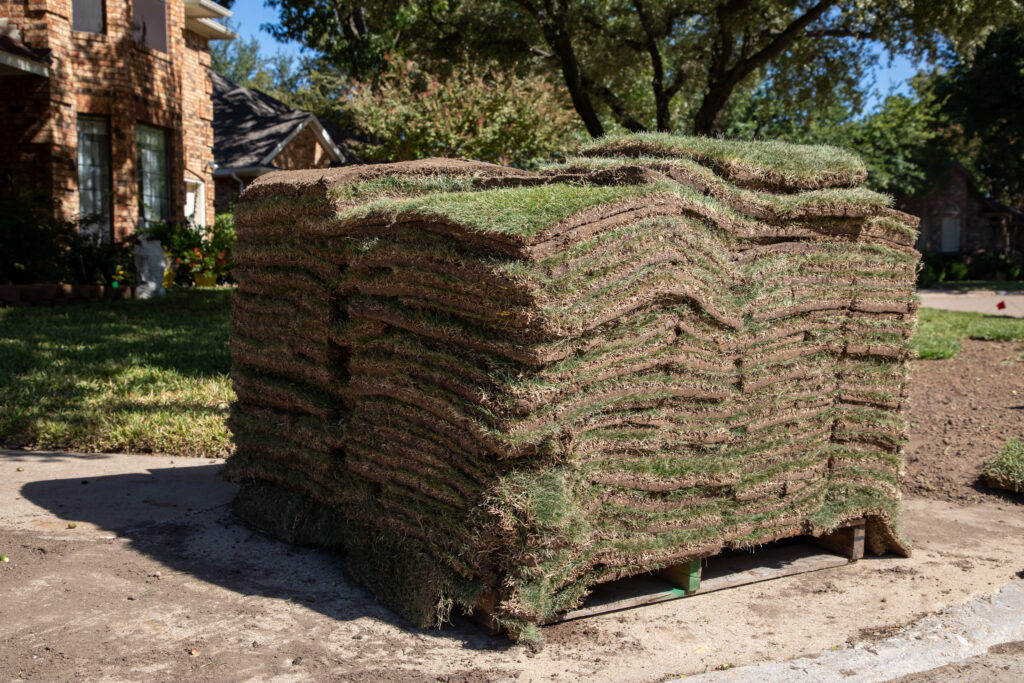
That is the short version. The rest of this guide compares all three grasses on the factors that decide whether a lawn thrives on Dallas-Fort Worth clay, with figures from Texas A&M’s turfgrass program so you can check our work.
Zoysia vs. Bermuda vs. St. Augustine: Side-by-Side Comparison
| Factor | Zoysia (Zeon / Palisades) | Bermuda | St. Augustine |
| Direct sun needed | 3 to 4+ hours | 5 to 6+ hours | 4 to 5 hours for most varieties |
| Shade tolerance | Good to excellent (Palisades best) | Poor; listed weakness | Superior among warm-season grasses |
| Nitrogen per year (per 1,000 sq ft) | 1 to 3 lbs | 2 to 6 lbs | 2 to 4 lbs |
| Mowing height | 1 to 2 inches | 1 to 2 inches | 2.5 to 3.5 inches |
| Mowing frequency | Every 7 to 10 days | Weekly or twice weekly | Weekly |
| Drought tolerance | Excellent once established | Excellent; extremely drought-hardy | Good, but wilts and thins first |
| Cold tolerance | Good | Good | Weak; listed weakness |
| Disease pressure | Low with proper nitrogen | Low | High (brown patch, take-all, chinch bugs) |
| Wear recovery | Slow | Fast | Moderate |
| Look | Fine (Zeon) or medium (Palisades), dense | Fine, thinner at home-lawn maintenance | Coarse, wide blade |
Sources for the figures above: Texas A&M AggieTurf profiles for zoysiagrass, bermudagrass, and St. Augustinegrass.
Sun Requirements: The Single Biggest Difference
Bermuda needs five to six hours of direct sun every day to hold density, and AggieTurf lists shade tolerance as one of its weaknesses. Saint Augustine handles four to five hours for most varieties, and AggieTurf credits it with superior shade tolerance relative to other warm-season grasses. Zoysia sits in between on paper and ahead in practice: Zeon prefers four or more hours and tolerates three, and Palisades holds at three.
Why does that matter more here than elsewhere? Because DFW neighborhoods built in the 1990s and 2000s now have 25-year-old trees. The Bermuda a builder laid in full sun in 2001 is sitting under a canopy in 2026, and the thin, weedy backyard is the result. That is the number one reason homeowners call us.
Shade: Zoysia vs. Saint Augustine
Saint Augustine is genuinely shade tolerant. The problem is what comes with it. AggieTurf lists cold tolerance, disease potential, traffic tolerance, and chinch bugs as Saint Augustine’s weaknesses, and every North Texas homeowner who has owned it knows the cycle: brown patch in fall, chinch bugs in August, and thinning after a hard winter.
Palisades Zoysia performs comparably to Saint Augustine in low light without that cycle. Our Zoysia vs. Saint Augustine post covers the switch in detail, and our Palisades installation page explains how we handle shaded lots.
Drought and Water Use
Bermuda is the champion here on paper. AggieTurf calls it extremely drought-hardy with deep rooting potential. Zoysia is close behind, with drought tolerance listed among its strengths, and established Zoysia in a normal DFW summer needs only one to two deep irrigation cycles a month. Saint Augustine also lists drought tolerance as a strength, but it is the first of the three to wilt and thin when watering restrictions bite in August.
The practical difference is not survival, it is appearance. All three survive a Texas drought. Zoysia and Bermuda stay dense doing it. Saint Augustine opens up and lets weeds in.
Maintenance: Mowing, Fertilizing, and Chemical Use
Mowing
Bermuda grows fast and needs weekly or twice-weekly mowing at one to two inches to look good, with heavy clippings. Saint Augustine mows weekly at two and a half to three and a half inches. Zoysia mows every seven to ten days at one to two inches, and AggieTurf’s one caution is that its stiff blades mean you sharpen the mower more often. Zeon can also be reel mowed for a fairway finish.
Fertilizing
This is where the gap is widest. AggieTurf’s annual nitrogen ranges are 1 to 3 pounds per 1,000 square feet for Zoysia, 2 to 4 for Saint Augustine, and 2 to 6 for Bermuda. A Bermuda lawn fed at the top of its range uses several times the nitrogen of a Zoysia lawn, and that fertilizer is also feeding thatch and runoff.
Weeds and Herbicide
Zoysia’s density is its own weed control. A healthy Zeon or Palisades lawn leaves almost no open soil for weed seed to germinate. Bermuda at home-lawn maintenance is thinner and needs pre-emergent and post-emergent applications to stay clean. Saint Augustine is dense when healthy but opens up after every fungus or cold event.
Disease and Insects
Saint Augustine is the outlier. Brown patch in cool, wet fall weather, take-all root rot, gray leaf spot in summer, and chinch bugs in the heat are standard Saint Augustine problems, and AggieTurf lists disease potential and chinch bugs as weaknesses. Bermuda has low disease potential. Zoysia can get large patch in fall, especially if over-fertilized late in the season, but it is manageable with nitrogen timing. Our Zoysia fungus guide shows what to look for and our nitrogen and fungus post explains the connection.
Cold Tolerance and DFW Winters
The National Weather Service freeze data for DFW puts the average first fall freeze at November 22 and the last spring freeze at March 12, with hard freezes well below that in some winters. Zoysia and Bermuda both go dormant, turn tan, and come back. Saint Augustine lists cold tolerance as a weakness, and in the hard winters North Texas gets every few years it does not always come back. If you had to resod dead Saint Augustine after a February freeze, you already know this.
Appearance: Which Looks Better?
Zeon Zoysia produces a golf-course-quality finish: fine blades, uniform density, and deep green color. Residential Bermuda, maintained at typical home-lawn heights and fertilizer rates, looks rougher and thinner than the sports-field Bermuda people picture. Saint Augustine has a wide, coarse blade that reads as lush from the street and rough up close. Palisades Zoysia splits the difference with a medium blade and a neat, traditional lawn look.
Recovery from Wear and Damage
Bermuda wins this one outright. AggieTurf notes its superior traffic tolerance and quick recuperative potential, and it repairs itself from dog runs and kids’ play faster than anything else. Zoysia’s slow recovery is a listed weakness, and Saint Augustine’s traffic tolerance is a weakness too. For a residential lawn this rarely decides the choice, but a backyard with a soccer goal and two large dogs is a reasonable case for Bermuda in full sun.
How Each Grass Establishes from Sod
All three are installed as sod in North Texas, and all three root in roughly two to three weeks during the warm season with daily watering. The differences show up after that.
- Bermuda fills gaps and seams fastest. AggieTurf lists rapid establishment among its strengths. It also invades beds and the neighbor’s yard just as fast.
- Saint Augustine also establishes quickly, per AggieTurf, but its first fall is when brown patch tends to show up on stressed new turf.
- Zoysia roots on the same timeline but spreads slowly, which is why we install it as full sod coverage with tight seams rather than plugs. NC State notes Zoysia from plugs can take two to four years to cover. Our first-30-days care guide covers the schedule.
Can You Mix Grasses on One Property?
Mixing Zoysia with Bermuda or Saint Augustine is a bad idea. Bermuda will run into Zoysia over time, and Saint Augustine’s coarse blade next to Zeon looks like a patch job. Mixing two Zoysias, on the other hand, works well. Zeon in the sunny front and Palisades in the shaded back is the most common layout we install, and the two blend at the transition because they share color, height, and growth habit.
If you are replacing part of a lawn, replace to a hard edge: a driveway, a bed line, or a fence. Our post on creating a crisp property line explains how we keep the neighbor’s Bermuda out.
Which Grass Should You Choose?
- Choose Zoysia if you want the lowest fertilizer and mowing load, a dense weed-resistant lawn, and a grass that handles the shade your trees now cast. Zeon for sun, Palisades for shade. Our Zoysia variety guide picks between them.
- Choose Bermuda if the lawn is full sun all day, takes heavy traffic, and you do not mind weekly mowing and a full fertilizer program.
- Choose Saint Augustine only if the lawn gets four to five hours of sun and you accept the fungus, chinch bug, and freeze risk, or if matching an existing Saint Augustine lawn matters more than performance.
The North Texas Bermuda Replacement Story
Most of our installations are replacements, not new construction. The pattern is the same across Plano, Frisco, Southlake, and Fort Worth: builder Bermuda thinned as the trees matured, the homeowner tried Saint Augustine in the back and fought fungus for five years, and Zoysia was the third and final grass. We would rather it be the first. Zoysia Sod has installed only Zoysia since 2005, and every job includes a free sunlight analysis so the right variety goes in the right spot.
Zoysia vs. Bermuda vs. St. Augustine FAQs
Is Zoysia better than Bermuda in Texas?
For most residential lawns, yes. Zoysia needs less sun, less nitrogen, and less mowing, and it suppresses weeds better. Bermuda is the better choice only for full-sun lawns with heavy traffic.
Which is more shade tolerant, Zoysia or St. Augustine?
Saint Augustine has a slight edge in the darkest shade, but Palisades Zoysia performs comparably at three or more hours of direct sun without Saint Augustine’s fungus, chinch bug, and cold problems.
Does Zoysia use less water than Bermuda?
Both are drought tolerant. Established Zoysia in a typical DFW summer needs only one to two deep waterings per month, which is comparable to Bermuda and less than Saint Augustine.
Can I lay Zoysia sod over an existing Bermuda lawn?
No. Bermuda has to be removed or it will grow through and take over. We strip the old turf and prepare the soil before every installation.
Which grass survives DFW winters best?
Zoysia and Bermuda both go dormant and return reliably. Saint Augustine lists cold tolerance as a weakness and is the grass most often lost in hard North Texas freezes.
Which grass needs the least fertilizer?
Zoysia, at 1 to 3 pounds of nitrogen per 1,000 square feet per year according to Texas A&M, compared to 2 to 4 for Saint Augustine and 2 to 6 for Bermuda.
Ready to Replace Your Bermuda or St. Augustine?
Zoysia Sod has installed Zeon and Palisades Zoysia across Dallas-Fort Worth since 2005. Family owned, soil prep included, and a written guarantee on every lawn. Call 469-802-0424 or request a free 24-hour satellite estimate.